KITCHEN NOTEBOOK / INGREDIENTS
Which Peas Should I Buy for Santorini-Style Fava?
A closer look at the legume behind the purée, with four places to shop online.
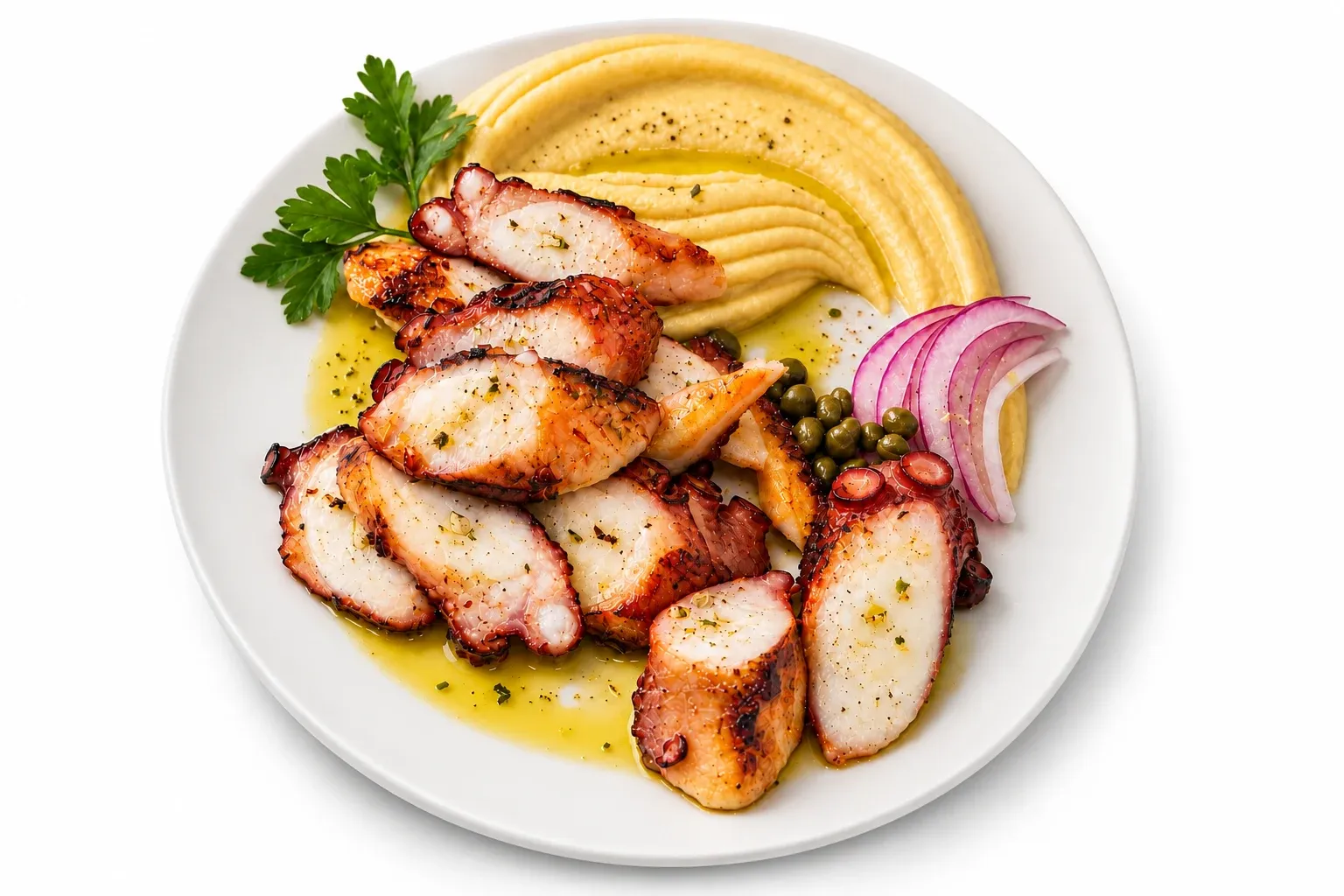
When shopping for In The Dish’s Grilled Octopus with Santorini Fava, look for yellow split peas. They are the ingredient used in our Santorini-style puree—but the word fava deserves a little explanation.
Understanding fava
In Greek cooking, fava can refer to a thick puree made from dried, peeled and crushed legumes. The ingredient varies by region: versions may use peas, broad beans or different species of Lathyrus. The name of the dish alone doesn’t identify what goes into the pot. [ECPGR]
Fava Santorinis PDO names a specific protected product made from Lathyrus clymenum, with production tied to its designated Aegean island region. It is distinct from broad beans, also commonly called fava beans, which belong to the species Vicia faba. [European Commission; ECPGR]
For our recipe
For our recipe, the shopping list is straightforward: yellow split peas, onion, olive oil and lemon, with water or light vegetable stock for cooking. The peas cook with the onion before being blended and finished with olive oil and lemon. Aim for a smooth, spoonable puree that forms the base for the grilled octopus.
The plate is finished with capers, thinly sliced red onion, parsley and extra-virgin olive oil. The puree is an integral part of the dish, so give its consistency attention before plating.
When buying ingredients, follow the recipe’s ingredient list rather than choosing a package simply because it says “fava.” For this version, choose yellow split peas. If you would like to cook with Fava Santorinis PDO, seek out that specifically identified product. We have not tested it as a substitution here, so matching quantities, cooking time and texture have not been established.
Where to buy Greek fava online
These products are sold for making Greek fava. Check the variety and origin on the package, and follow its cooking directions. A product labelled “fava” is not necessarily the same legume as ordinary yellow split peas or Fava Santorinis PDO.
AGRINO Fava, 500 g
Product of Greece. Check the package for a specific growing region.
Cooking use: Purées, dips and soups.
Online source: Malincho. See the shopping link below.
Arosis Greek Fava, 400 g / about 14 oz
From Larisa, according to Arosis.
Cooking use: Traditional fava purée finished with olive oil and lemon.
Online source: Cedar Foods. See the shopping link below.
3ALFA Greek Split Fava, 500 g
The linked retailer lists the Larissa product. Check that origin on the specific package.
Cooking use: Greek fava purée and meze.
Online source: GreekShops. See the shopping link below.
Kouli Yellow Split Fava, 500 g
The retailer identifies Prespes, Florina, northern Greece.
Cooking use: Yellow split peas for fava purée or a meze spread.
Online source: Agora Greek Delicacies — UK. See the shopping link below.
Product listings checked November 15, 2026. Stock and delivery options can change. The Kouli source above is a UK retailer.